
Table of contents
Antarctica goes by a couple of nicknames - the seventh continent, the frozen south, or simply “the ice”. The photos of its formidable landscapes and ice-covered land masses seem like shots filmed somewhere on Mars. Yes—Antarctica has runways, ice strips, and gravel aerodromes tied to research stations and logistics hubs, but not a traditional international passenger terminal like in a major city. Most visitors still arrive by ship; flights that do exist are specialized, tightly regulated, and highly weather dependent. Even so, thousands of tourists reach the continent each year by cruise, charter air, or a combination of both.
Last updated: April 2026.
What is Antarctica?
Before we delve into aerial paths that lead to and across this frozen wasteland, it’s important that we fully understand what Antarctica actually is and why there is quite a handful of things to consider before traveling there. First of all, Antarctica is immense. It covers the surface of 14 million square kilometers while its coastline stretches along 11 000 miles. Average ice thickness is around jaw-dropping 1.6 kilometers and temperatures fluctuate between +10°C in the summer and −40°C in winter. These two seasons are the only two seasons that exist in such barren parts of the world. 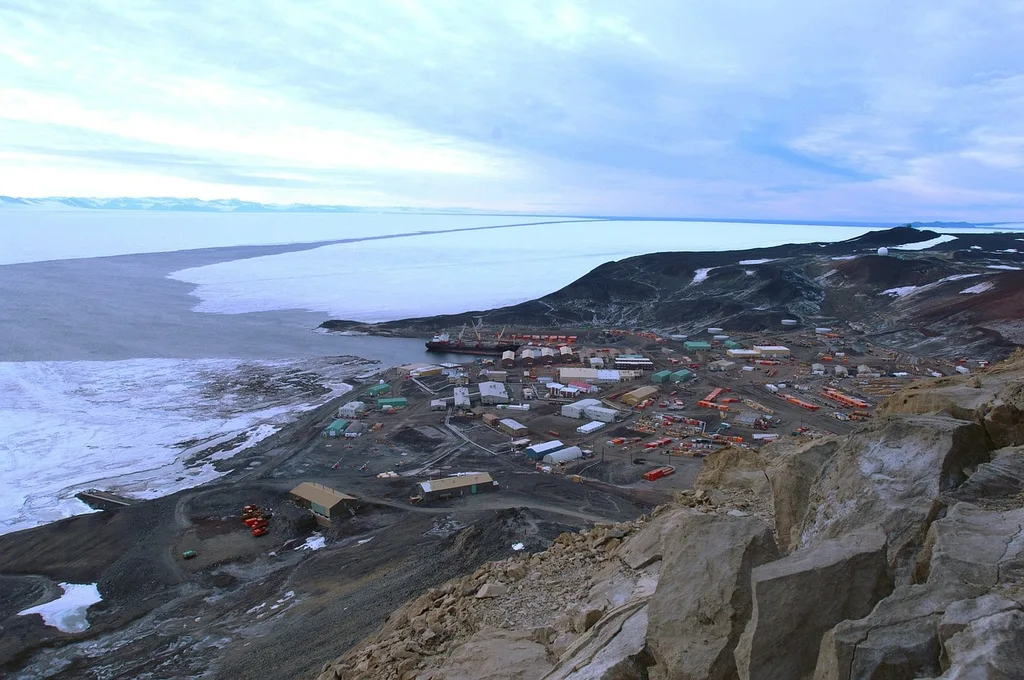
Is There an Airport in Antarctica?
Back in the day, the only way to get to Antarctica was to be a scientist on an expedition ship. It was only later that visitor tours were allowed. Nowadays, travelers can choose whether they prefer cruising to Antarctica or flying there. The reason why Antarctica has been kept in such high regard is its sheer icy might and enormous potential for exploration. Having been untouched for centuries on end, it was protected by the Antarctic Treaty, signed in 1959 and in force from 1961. The consultative parties i.e. the countries who signed the treaty, pledged to demilitarize Antarctica and ensure that “Antarctica shall continue forever to be used exclusively for peaceful purposes” (Art. I, The Antarctic Treaty). Since then, the South Pole is available for research and only a limited number of tourist visits every year. 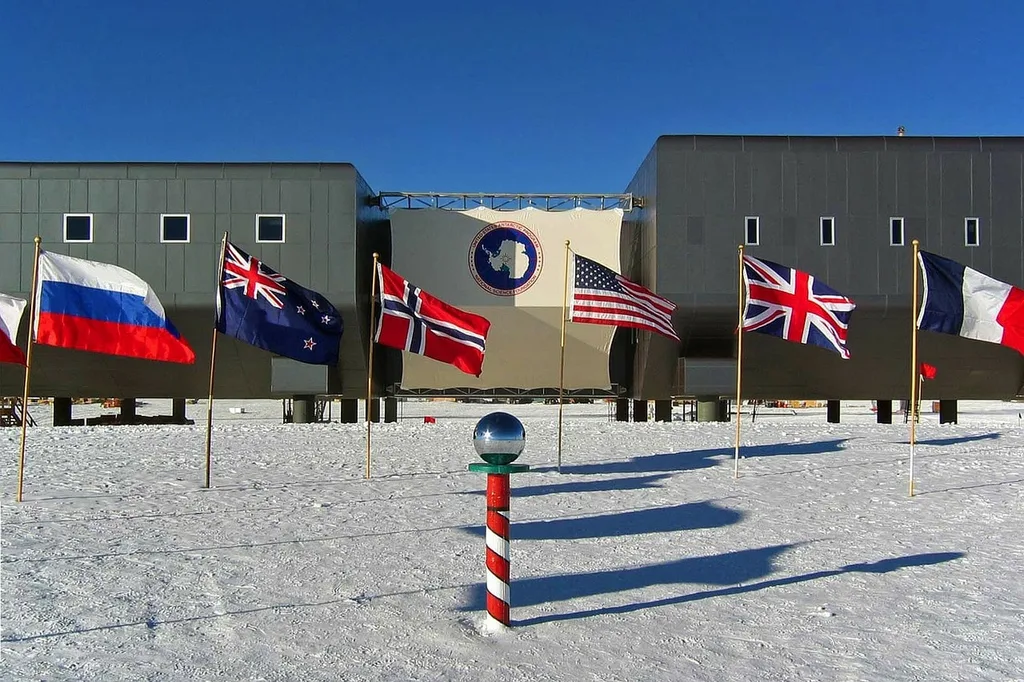
List of Airports in Antarctica
After the Treaty was signed, the parties agreed that individual countries should have their own outposts and research bases. The bases that have been formed throughout Antarctica usually have their own runways provided that they are large and significant enough. Among the leading base camps are those belonging to the United States, Russia, Australia, Chile, and the United Kingdom. Many of these airfields have ICAO location codes and operate under strict aviation rules, even though Antarctic flying is nothing like busy commercial hub traffic. Still, official landing facilities and developed public airports do not exist in Antarctica. 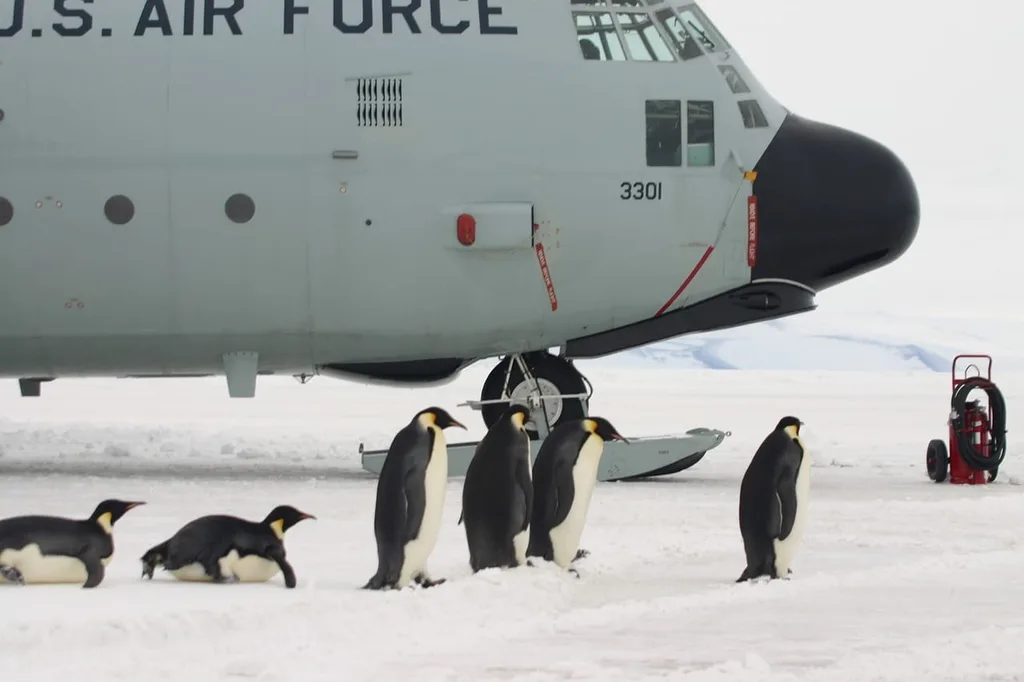
The UK Airports in Antarctica
The United Kingdom holds several bases: Fossil Bluff, Halley Research Station, Rothera Research Station, Sky Blu, and Wolfs Fang Runway. Fossil Bluff, an air operations refueling facility is a kilometer away from a skiway. Apart from refueling, the station is also a jumping-off point for other operations into Antarctica. Fossil Bluff is only 90 minutes’ flight from Rothera, a research station on Adelaide Island. Rothera has 2,950 ft gravel runway and it’s home to a fleet of five specially adapted aircraft. Halley Research Station has its ice runway, serving as a transit point to Rothera. Sky Blu is located in Palmer Land and in an area of extremely dense ice, providing it with a sturdy runway with 3,960 feet in length. Wolfs Fang Runway is a private runway belonging to a luxury travel company White Desert Ltd.
The US Airports in Antarctica
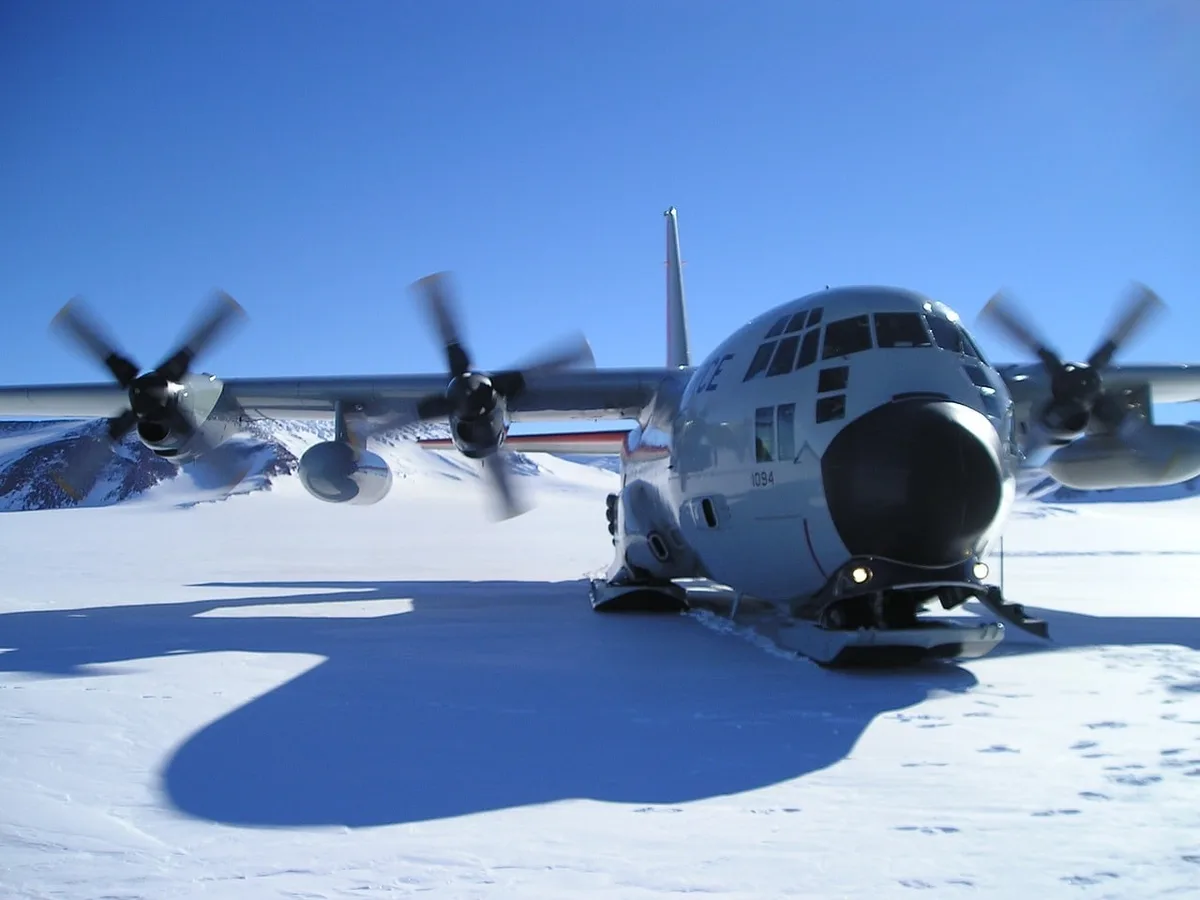
The United States Antarctic Program is based in McMurdo Station on Ross Island. This is where Ice Runway is located - the principal runway of the US Program. It is one of the few that can handle four-wheel aircraft, such as Lockheed, Orion, and Boeing and it’s 10,000 feet long. McMurdo was serviced by three runways: Pegasus White, the main Ice Runway, and Williams Field. In 2017, Phoenix Airfield was made to replace Pegasus. The Jack F. Paulus Skiway (runway length: 12,000 ft) is located at Amundsen–Scott South Pole Station, named in honor of Roald Amundsen and Robert F. Scott, the pioneers to the South Pole. Union Glacier Blue-Ice Runway (runway length: 9,842 ft) is also one of the capital runways and it’s operated by Antarctic Logistics & Expeditions providing tours to the interior of Antarctica as well as expedition support. The remaining two stations include Palmer (runway length: 2,500 ft) and Patriot Hills (runway length: 3,281 ft) which was once the only private seasonally occupied camp but today, it’s a backup runway. 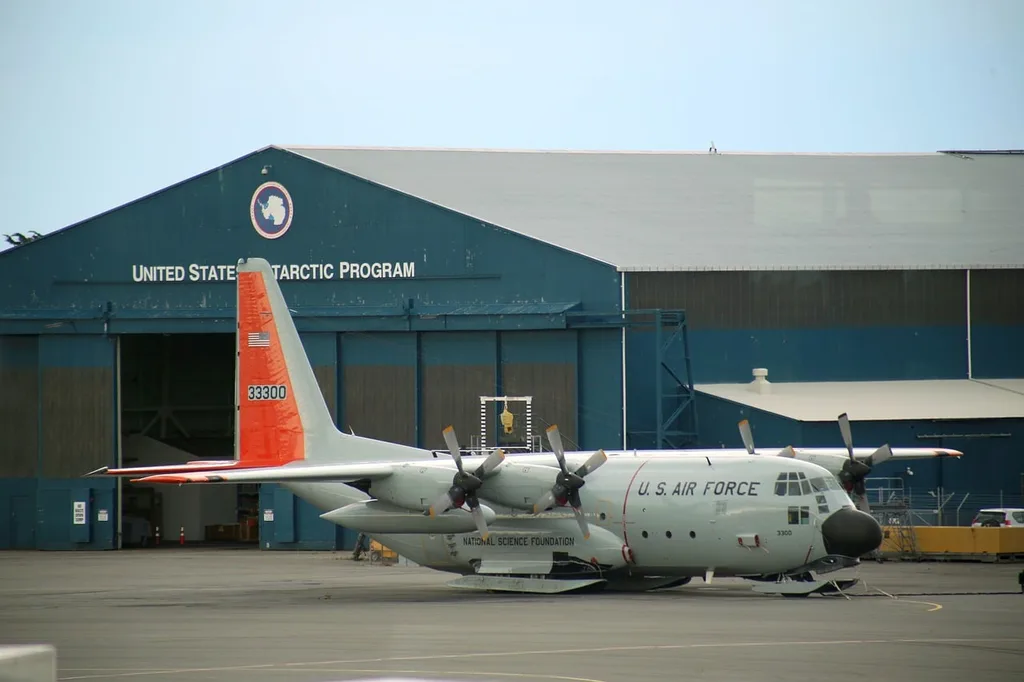
Russian Airports in Antarctica
Queen Maud Land (roughly 20°W to 45°E) is the sector of Antarctica commonly associated with Norway on maps, while day-to-day activity still follows the Antarctic Treaty framework. Several nations operate research stations there, including Russia’s Novolazarevskaya Station (often called Novo), which supports research flights and occasional charter movements. Molodyozhnaya Station (runway length: 8,395 ft) has historically supported seasonal aviation, while Progress Station (runway length: 3,280 ft) functions as a scientific wintering complex.
Australian Airports in Antarctica
Being rather close to Antarctica, Australia has a few of its own bases there. However, Australia operates a sole runway aerodrome - Wilkins Runway (10,499 ft), which is used to transport scientists and it’s unavailable for tourist flights. As one of three permanent bases, the Casey Station is pivotal for the Australian Antarctic program. There is also a smaller Casey Station Skiway (runway length: 6,547 ft) which is 10 kilometers east of the main station. There are also the Davis Station (runway length: 317 ft) and Mawson, serving for exclusively scientific purposes.
Chile Airports in Antarctica
As one of the rare gravel airports in Antarctica, the Teniente Rodolfo Marsh Martin Airport is served by various public flights, including fly/cruise. Not only is it the only one that has an IATA code (location identifier) but it’s also a part of Chile’s Antártica commune. Bernardo O’Higgins base (runway length: 2,625 ft) is a principal Chilean outpost in the Antártica commune and one of the oldest Antarctic bases ever founded.
Antarctica airports FAQ
Is there an airport in Antarctica?
There is no classic city-style commercial airport on the continent, but there are gravel, ice, and blue-ice runways and skiways that function as airports for research and tightly managed logistics and tourism.
Does Antarctica have an IATA airport code?
Chile’s Teniente Rodolfo Marsh Martin Airport on King George Island is one of the few Antarctic airfields commonly referenced with an IATA-style location identifier and scheduled-style access patterns—still nothing like a major international hub.
Can tourists fly to Antarctica directly?
Most visitors still arrive by cruise ship. Fly-in programs typically use gateway cities in Chile, Argentina, New Zealand, or South Africa, then specialized aircraft to ice or gravel strips such as Union Glacier, or segments that connect with ship itineraries.
Which Antarctic runway is used for intercontinental flights?
For long-range movements from outside the continent, Troll Airfield (linked to Norway’s Troll Station) is the primary example often discussed for connections such as Cape Town charters, subject to weather and season.
Obviously, Antarctica has many airfields although a great majority of them are not used by the general public. By restricting the number of tourist visits, the goal of conservationists and scientists is to salvage these unique ecosystems from dying out, especially when global warming and ice melting has become such a huge concern.